
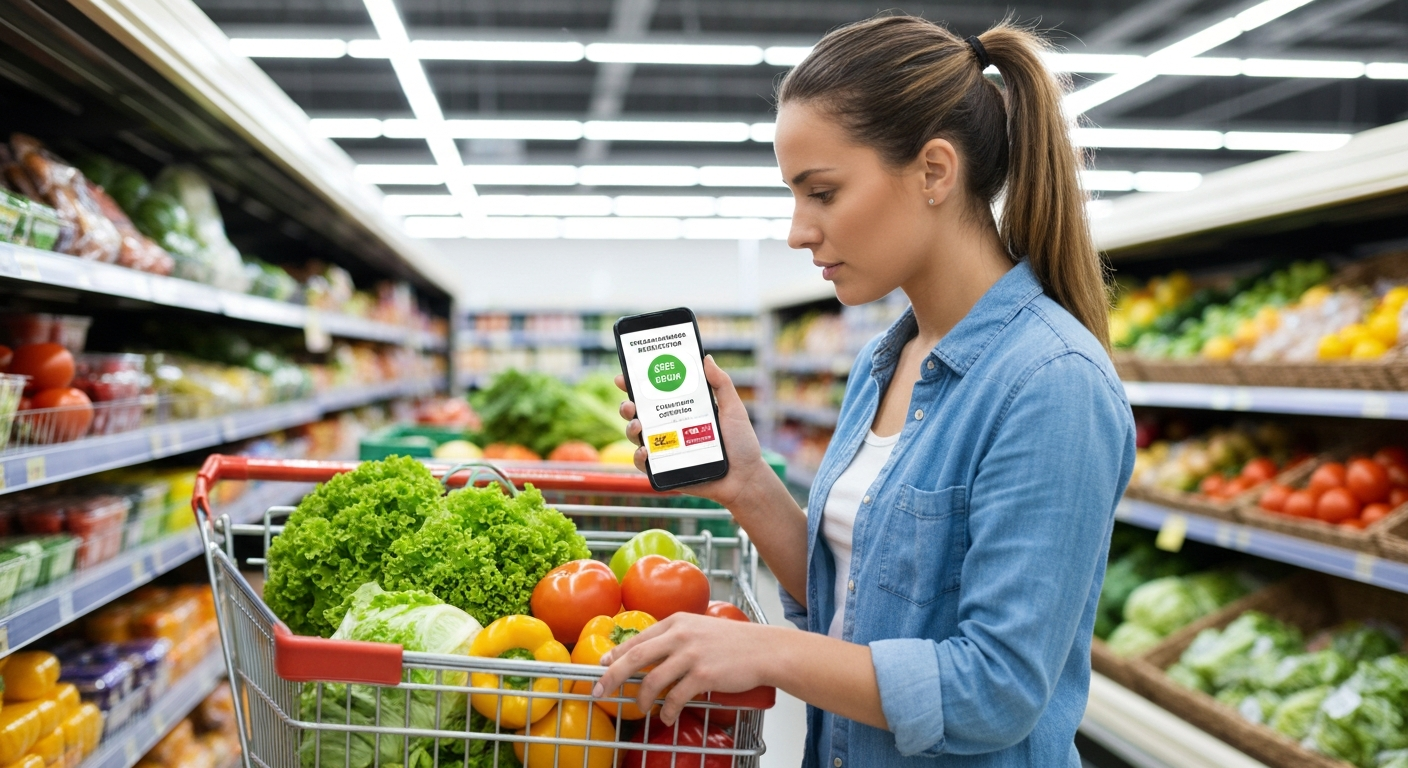
The average American household spends $1,060 per month on groceries in 2026, according to the Bureau of Labor Statistics. For a family of four, that number can easily climb past $1,300.
And here’s what most people don’t realize: coupons are not the answer. Traditional couponing is time-consuming, often pushes you to buy name brands you wouldn’t normally purchase, and rarely covers the fresh produce, meat, and dairy that make up most of your grocery bill.
The real savings come from changing how you shop, not from chasing 50-cent discounts on products you don’t need.
The strategies below are practical, realistic, and require zero coupon clipping. Used together, they can easily save a typical household $200-$400 per month — that’s $2,400 to $4,800 per year back in your pocket.
1. Meal Plan Before You Shop
This is the single most impactful change you can make. People who meal plan spend 23% less on groceries than those who don’t, according to a 2024 study from the International Food Information Council.
Meal planning doesn’t mean you need a Pinterest-worthy spreadsheet. It can be as simple as this:
- Check what you already have in the fridge, freezer, and pantry
- Plan 5-6 dinners for the week (leave a night or two for leftovers or takeout)
- Build your grocery list from those meals
- Stick to the list
Estimated savings: $100-$175/month for a family of four.
Quick Meal Planning Tips
- Plan around sales. Check your store’s weekly ad (most are on their app or website) and build meals around what’s discounted.
- Repeat winners. You don’t need 7 unique meals. Most families rotate through 10-15 dinners they actually enjoy. Find yours and reuse them.
- Cook once, eat twice. If you’re making chili, make a double batch. Dinner tonight, lunch tomorrow — no extra effort.
2. Never Shop Without a List
This is the companion to meal planning, and it works even if you don’t formally meal plan. Walking into a grocery store without a list is how $50 trips turn into $150 trips.
Stores are designed to make you buy more. End caps, eye-level product placement, bakery smells, and checkout candy — it’s all engineered. A list is your defense.
Pro tip: Organize your list by store section (produce, dairy, meat, pantry) so you’re not backtracking through the store and passing tempting displays twice.
Estimated savings: $50-$80/month from impulse purchases alone.
3. Switch to Store Brands on Everything
This is free money. Store-brand products are 25-40% cheaper than name brands, and in most cases they’re made in the same factories.
Here’s the reality: Kirkland (Costco), Great Value (Walmart), Good & Gather (Target), and Aldi’s private labels are manufactured by the same companies that make the name-brand versions. The difference is marketing, not quality.
Where Store Brands Save the Most
| Product | Name Brand | Store Brand | Savings |
|---|---|---|---|
| Cereal (18 oz) | $5.49 | $3.29 | 40% |
| Canned tomatoes (28 oz) | $3.19 | $1.49 | 53% |
| Shredded cheese (8 oz) | $4.99 | $3.49 | 30% |
| Pasta (16 oz) | $2.79 | $1.19 | 57% |
| Frozen vegetables (12 oz) | $3.49 | $1.99 | 43% |
| Paper towels (6 rolls) | $12.99 | $7.99 | 38% |
If your household buys 30-40 store-brand items per week instead of name brand, you’re looking at real numbers.
Estimated savings: $60-$120/month depending on household size.
4. Buy Seasonal Produce
Out-of-season produce is expensive because it’s shipped from another hemisphere. In-season produce is abundant, local, and cheap.
What’s in Season (and Cheapest) by Quarter
January – March: Citrus fruits, cabbage, sweet potatoes, kale, leeks, turnips, winter squash
April – June: Asparagus, strawberries, peas, spinach, artichokes, cherries
July – September: Tomatoes, corn, peaches, watermelon, zucchini, peppers, blueberries
October – December: Apples, pumpkin, Brussels sprouts, cranberries, pears, root vegetables
A pint of blueberries costs $2.50 in July and $5.99 in January. Tomatoes are $1.49/lb in August and $3.99/lb in February. Buying in season means better taste at half the price.
Estimated savings: $30-$50/month.
5. Use Cashback Apps (Not Coupons)
Cashback apps are different from coupons. You shop normally, buy what you were already going to buy, and earn money back. No clipping. No planning around manufacturer promotions.
The Best Grocery Cashback Apps in 2026
Ibotta — The biggest grocery cashback app. Offers range from $0.25 to $5.00 back on specific products, and they frequently run bonuses. They also have a “free after offer” section where you get entire products for free. Average active users earn $30-$50/month.
Fetch Rewards — Scan any receipt from any store. You earn points on everything, with bonus points for specific brands. It’s the easiest app because there’s nothing to activate — just scan. Average earnings: $10-$20/month in gift cards.
Checkout 51 — Weekly offers on common grocery items. Smaller than Ibotta but has unique offers that don’t overlap.
Shopkick — Earn “kicks” (points) just for walking into stores, scanning items, and making purchases. Points convert to gift cards.
Combined estimated earnings: $40-$70/month with minimal effort.
How to Stack Cashback Apps
There’s no rule that says you can only use one. Buy a gallon of milk, scan the receipt in Ibotta, then scan it in Fetch, then check Checkout 51. Same purchase, triple the cashback. It takes about 90 seconds total after shopping.
6. Join Store Loyalty Programs
Every major grocery chain has a free loyalty program, and most people either don’t sign up or don’t use them fully. These are not credit cards — they’re free rewards programs.
What you get:
- Member-only prices — At many stores (Safeway, Kroger, Albertsons, Vons), the “sale” price only applies if you scan your loyalty card. Without it, you’re paying full price.
- Digital deals — Load offers to your card through the store’s app. This is different from coupons — these are instant discounts that apply automatically at checkout.
- Fuel rewards — Kroger, Safeway, and others give fuel discounts based on grocery spending. $100 in groceries can earn $0.10-$0.30 off per gallon.
- Personalized offers — The longer you use a loyalty program, the more tailored deals you get on items you actually buy.
Estimated savings: $25-$50/month plus fuel discounts.
7. Compare Unit Prices, Not Sticker Prices
This is the most underused trick in the grocery store. The unit price — the small number on the shelf tag that shows cost per ounce, per pound, or per count — is the only number that tells you which product is actually cheaper.
Example: A 12 oz jar of peanut butter for $3.49 ($0.29/oz) versus a 28 oz jar for $5.99 ($0.21/oz). The bigger jar costs more upfront but saves you 28% per ounce.
This works the other way too. Sometimes the smaller size is actually a better deal, especially when the larger size carries a “premium” markup.
Where Unit Price Comparison Saves the Most
- Cleaning supplies and paper products — Bulk sizes can save 30-50%
- Snack foods — Family-size bags are almost always cheaper per ounce
- Cooking oils and condiments — Larger bottles save significantly
- Canned goods — Buying bigger cans (28 oz vs. 15 oz) of tomatoes, beans, and broth saves 20-35%
Estimated savings: $15-$30/month once you build the habit.
8. Cook Freezer Meals in Batches
Freezer meals eliminate the #1 reason families overspend on food: not knowing what’s for dinner and ordering takeout.
The average takeout order for a family of four costs $45-$65. A freezer meal costs $8-$15 to prepare and serves the same number of people. If batch cooking prevents even two takeout orders per month, you’re saving $60-$100.
Getting Started with Freezer Meals
You don’t need to spend an entire Sunday cooking. Start simple:
- Double every recipe you already make and freeze half
- Prep dump-and-go bags — combine raw ingredients (meat, sauce, seasoning, vegetables) in freezer bags. On busy nights, dump the bag into a slow cooker or Instant Pot.
- Freeze individual portions of soups, stews, and casseroles for quick lunches
Best Freezer Meal Recipes for Beginners
- Chili (freezes perfectly for 3-4 months)
- Chicken stir-fry kits (raw chicken + vegetables + sauce in a bag)
- Meatballs (cook a triple batch, freeze on a sheet pan, bag them up)
- Soup — nearly any soup freezes well
- Burritos — wrap individually in foil, grab and reheat
Estimated savings: $60-$130/month from avoided takeout.
9. Shop at Discount Grocery Stores
If you haven’t tried Aldi or Lidl, you’re likely overspending on groceries. These stores use a fundamentally different model than traditional supermarkets — smaller stores, fewer brands, private labels, and efficiency at every turn.
Aldi vs. Traditional Grocery: Price Comparison
| Item | Traditional Grocery | Aldi | You Save |
|---|---|---|---|
| Gallon of milk | $4.29 | $3.09 | 28% |
| Dozen eggs | $3.99 | $2.69 | 33% |
| Loaf of bread | $4.49 | $2.19 | 51% |
| 1 lb ground beef | $6.99 | $4.99 | 29% |
| Bag of apples (3 lb) | $5.99 | $3.99 | 33% |
| Block of cheese (8 oz) | $4.49 | $2.99 | 33% |
A full grocery run at Aldi typically costs 30-40% less than the same items at a traditional supermarket. For a family spending $300/week, switching to Aldi for even half your groceries saves $45-$60 per week.
Other Discount Options
- WinCo Foods (western US) — employee-owned, no-frills, and consistently cheaper than Walmart
- Grocery Outlet — “the extreme value grocery store” with rotating inventory at deep discounts
- Walmart Neighborhood Markets — smaller format stores with Walmart’s everyday low prices
- Dollar Tree / Dollar General — Good for pantry staples, spices, and canned goods (always check unit prices)
Estimated savings: $80-$200/month depending on how much you shift your shopping.
10. Reduce Food Waste
Here’s a number that should make you uncomfortable: the average American household throws away $1,500 worth of food per year. That’s roughly $125/month going straight into the garbage.
Reducing food waste isn’t about eating things you don’t want — it’s about buying smarter and using what you have.
Practical Ways to Waste Less Food
- First in, first out. When you put new groceries away, move older items to the front of the fridge and pantry.
- Check the fridge before shopping. This takes 2 minutes and prevents duplicate purchases.
- Understand expiration dates. “Best by” and “sell by” dates are about quality, not safety. Most food is perfectly fine for days (sometimes weeks) past these dates. The only exception is baby formula.
- Repurpose leftovers. Leftover rice becomes fried rice. Stale bread becomes croutons or bread pudding. Wilting vegetables go into soup or stir-fry.
- Freeze before it goes bad. Bread, meat, cheese, bananas, berries — almost everything freezes well if you catch it in time.
Estimated savings: $50-$125/month.
11. Buy Meat and Protein Strategically
Meat is typically the most expensive item on your grocery list. A few simple shifts can cut your protein budget dramatically.
Buy the whole chicken, not parts. A whole chicken costs $1.50-$2.00/lb. Boneless skinless breasts cost $4.00-$5.50/lb. Learning to break down a whole chicken (it takes 5 minutes with a YouTube tutorial) saves you 50% or more — and you get bones for homemade stock.
Buy family packs and freeze portions. Family packs of chicken thighs, ground beef, and pork chops are typically 15-25% cheaper per pound. Divide them into meal-sized portions when you get home and freeze.
Add plant-based protein days. Beans, lentils, eggs, and tofu cost a fraction of meat. A pound of dried beans costs about $1.50 and provides the same protein as $8-$10 worth of chicken. You don’t need to go vegetarian — just replacing 2-3 meat-based dinners per week with beans, eggs, or lentils makes a noticeable difference.
Buy marked-down meat. Most stores discount meat that’s approaching its sell-by date by 30-50%. Buy it and freeze it immediately. There’s nothing wrong with it — the store just needs shelf space.
Estimated savings: $40-$75/month.
12. Stop Buying Pre-Cut, Pre-Washed, and Pre-Prepared
Convenience has a steep markup. Every time someone else does the prep work, you pay extra for the labor.
| Convenience Item | Price | DIY Version | Price | Markup |
|---|---|---|---|---|
| Pre-cut fruit bowl | $7.99 | Whole fruit, cut yourself | $3.50 | 128% |
| Bagged salad kit | $4.99 | Head of lettuce + toppings | $2.50 | 100% |
| Shredded cheese | $4.99/8 oz | Block cheese, grate yourself | $3.49/8 oz | 43% |
| Baby carrots | $3.99/lb | Whole carrots, peel + cut | $1.29/lb | 209% |
| Stir-fry vegetable mix | $4.49 | Buy vegetables separately | $2.50 | 80% |
If you’re buying 5-6 convenience items per week, switching to whole ingredients saves $10-$15 weekly — that’s $40-$60 per month.
The one exception: If buying pre-cut vegetables is the difference between cooking at home and ordering takeout, the convenience is worth it. A $5 bag of pre-cut stir-fry vegetables leading to a $12 home-cooked meal is still cheaper than $50 in DoorDash.
Estimated savings: $40-$60/month.
13. Buy Staples in Bulk
Buying in bulk doesn’t mean buying everything at Costco. It means identifying the non-perishable items you use every week and buying larger quantities at a lower unit price.
Best Items to Buy in Bulk
- Rice and pasta — store indefinitely, and bulk prices are 30-50% cheaper
- Canned goods — tomatoes, beans, broth, tuna — stock up when on sale
- Cooking oils — a gallon of olive oil is significantly cheaper per ounce than a 16 oz bottle
- Spices — buy from bulk bins or ethnic grocery stores instead of the spice aisle (McCormick charges $6 for what you can get for $1-$2 at an Asian or Mexican grocery)
- Oats, flour, sugar — large bags save 25-40%
- Coffee — whole bean or ground in larger bags saves $2-$5 per pound compared to small packages
- Toilet paper and paper towels — the bulk price difference is significant
Bulk Buying Mistakes to Avoid
- Don’t bulk buy perishables unless you’ll use them or freeze them
- Don’t buy bulk just because it’s “a deal” — if you don’t use it, it’s waste
- Compare unit prices — sometimes the regular grocery store has a better deal than the warehouse club
Estimated savings: $25-$50/month.
14. Shop Less Frequently
Every trip to the grocery store is an opportunity to spend money you didn’t plan to spend. Research shows that the average unplanned purchase per grocery trip is $20-$30.
If you’re going to the store 3-4 times per week, those impulse buys add up to $60-$120 per week in unplanned spending.
The fix: Shop once per week. Use your meal plan, use your list, make one trip. If you forget something, ask yourself if you truly need it before making a separate run.
Some families go even further — shopping every two weeks with a well-planned list and a freezer full of protein. It takes practice, but the savings compound.
Estimated savings: $50-$80/month from reduced impulse spending.
15. Eat Before You Shop
This sounds almost too simple to include, but research backs it up. A 2023 study published in JAMA Internal Medicine found that hungry shoppers spend an average of $15-$20 more per trip than shoppers who ate beforehand.
When you’re hungry, everything looks good. The rotisserie chicken, the bakery items, the deli counter, the chips on the end cap — your brain is telling you to buy food because you need food right now.
Eat a snack or meal before you go. Your cart (and your wallet) will reflect the difference.
Estimated savings: $15-$20/month (based on weekly shopping).
How Much Can You Actually Save?
Let’s be realistic. You don’t need to implement all 15 strategies perfectly to see significant savings. Here’s what different levels of commitment look like:
Estimated Monthly Savings by Effort Level
| Level | Strategies Used | Monthly Savings | Annual Savings |
|---|---|---|---|
| Starter | Meal planning + grocery list + store brands | $150-$250 | $1,800-$3,000 |
| Intermediate | Starter + cashback apps + loyalty programs + discount stores | $275-$400 | $3,300-$4,800 |
| Committed | All 15 strategies combined | $400-$600+ | $4,800-$7,200+ |
Even at the “starter” level, that’s enough to cover an emergency fund contribution, a car payment, or a meaningful dent in credit card debt.
Frequently Asked Questions
Is it really possible to save $400/month on groceries without coupons?
Yes, but it depends on your starting point. If you’re currently spending $1,200-$1,500/month on groceries for a family of four with no strategy — shopping without a list, buying all name brands, never checking unit prices, making multiple trips per week — the savings from implementing these strategies add up quickly. Someone already spending carefully will see smaller gains. The biggest single impact comes from switching to a discount grocer like Aldi and cutting food waste.
Are store brands really as good as name brands?
In most cases, yes. Consumer Reports and independent taste tests consistently show that store brands match or beat name brands across most product categories. Many are literally produced in the same factories with the same ingredients. Start with pantry staples (canned goods, pasta, rice, flour, sugar) where you’re least likely to notice any difference, then expand from there.
How do cashback apps like Ibotta and Fetch make money if they’re paying me?
These apps earn commissions from brands and retailers. When you buy a product through an Ibotta offer, the brand pays Ibotta for driving that purchase, and Ibotta shares a portion with you. It’s an advertising model — brands pay for guaranteed sales. Your data (purchasing patterns) also has value to these companies, so consider that trade-off. But in pure dollar terms, you’re earning real cash back on purchases you’d make anyway.
Is bulk buying worth it if I don’t have a Costco or Sam’s Club membership?
You don’t need a warehouse club to buy in bulk. Regular grocery stores sell larger sizes at lower unit prices — compare the 16 oz pasta to the 32 oz box, or the standard peanut butter jar to the large one. Ethnic grocery stores (Asian, Mexican, Indian) are also excellent for bulk staples like rice, spices, beans, and cooking oils at prices well below traditional supermarkets. If you do consider a Costco membership ($65/year), it typically pays for itself within 2-3 trips for a family.
What’s the fastest way to start saving on groceries this week?
Do three things before your next shopping trip: (1) Check your fridge, freezer, and pantry and plan meals around what you already have. (2) Write a list and commit to buying only what’s on it. (3) Download the Ibotta app and activate offers on items you’re already planning to buy. These three steps alone — meal planning, a list, and cashback — can save $50-$75 on your very next trip.
How do I save on groceries when food prices keep going up?
Inflation makes these strategies more important, not less. When prices rise 5-10% across the board, the people who save the most are the ones who were already shopping strategically. Focus on the highest-impact changes first: switch to a discount grocer for your main shop, swap to store brands, and eliminate food waste. These three moves offset most price increases and then some.